Scientific name: Chelonia mydas
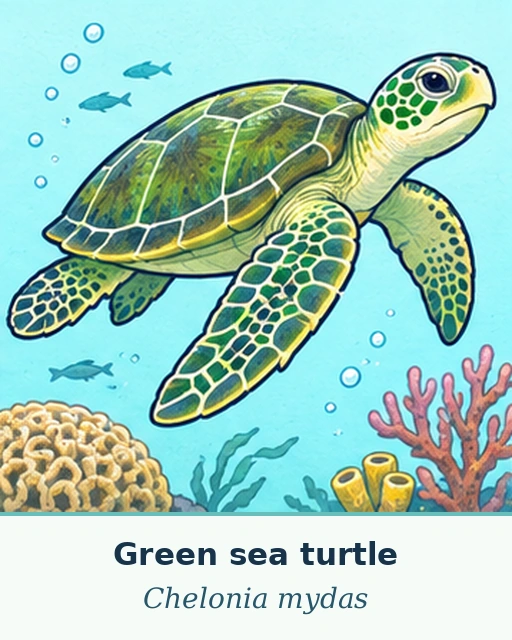
About the animal
This marine reptile breathes air. Many adults graze on seagrass and algae.
Where it lives
It lives in tropical and subtropical seas around the world. Females come ashore to lay eggs on sandy beaches.
Global conservation status (IUCN)
Least Concern globally as of the 2025 assessment. The Central South Pacific group is still Endangered.
Estimated population
There is no single count of all ages worldwide. Data behind the 2025 assessment showed an increase of about 28% over roughly 50 years.
People and this animal
People protect nesting beaches and change fishing gear to reduce accidental catches. Bright lights near beaches can confuse hatchlings.
Fun fact
The name refers to the greenish fat inside its body. Its shell is usually brown or olive.
Sources
https://doi.org/10.2305/IUCN.UK.2025-2.RLTS.T4615A285108125.en
https://www.iucn-mtsg.org/statuses
https://www.fauna-flora.org/news/turtle-turnaround-dramatic-comeback-for-one-of-fauna-floras-priority-species/
https://www.fisheries.noaa.gov/species/green-turtle